The following article comes from liquid youth, written by Gao Min Pang Bo.

Liquid youth
Understand the real world and see the complicated life. It’s all produced now
Author | Gao Min Pang Bo
"In the world of police dogs, the importance of obeying orders is far greater than your own life and death."
"330,000 for the third time, congratulations!" After saying his word, the people sitting on Mazza exclaimed and applauded, and stood up to look at the man holding the C289 auction number plate-the highest auction price for the elimination of dogs by China Criminal Police College on July 7.
The auction lasted from 10: 00 a.m. to around 13: 00 a.m., attracting more than 1,000 people from all over the country, and all 54 dogs eliminated from the police academy were sold within a few hours. The highest price is the aforementioned German shepherd, and the lowest price is more than 20,000 yuan.
As early as June 22nd, official website, China Criminal Police College, issued the Announcement on the Sale of Out-of-date Dogs, saying that the trained dogs that were eliminated from the examination would be sold. They are concentrated in 2-3 years old, most of them are German shepherds, but also springer, horse dogs and so on. The reasons for elimination involve "soft ears", "timidity" and "long hair". This batch of eliminated dogs was also ridiculed as "failure of examination and compilation".
The auction on July 7th pushed the event to Weibo again.
01
auction
At 8: 20 in the morning, Anna, a native of Shenyang, lined up with her son outside Baishan Road Campus of China Criminal Police College. She hopes to buy the no.32 eliminated dog that she has long liked, which is a gift she promised her son for his sixth birthday.
At this time, people from Beijing, Shandong, Tianjin, Guangdong, Jiangsu and other places have already waited outside. The auction, which was originally planned to start at 9: 30, didn’t start until more than 10 o’clock.

There was a long queue at the scene early. Photo: Respondents
As early as the announcement of the sale of eliminated dogs, Anna started her homework. She found the trainer of No.32 dog and learned that the auction price in previous years was around 2000 yuan. Thinking that this year’s dog auction was a hot search, she specially prepared 30 thousand yuan to bid for the German shepherd "Beibei" that her son saw.
Anna lives in a villa in Shenbei New District outside the Third Ring Road in Shenyang. It is no problem to raise a large dog. There used to be a monkey terrier at home for 16 years. My son has lived with the dog since he was born. After the dog died the year before last, he has been thinking about raising another one. In the cartoon "Wang Wang Team Makes Great Achievements", my son’s favorite Archie is a German shepherd police dog. In this auction, they specially asked for leave from the kindergarten, took the lucky money saved by the children and the original budget of 30 thousand yuan, and went straight to Beibei’s kennel. Beibei in the cage looked at the visitors calmly, and heard them shout "Beibei" and "Ouch".
After the auction began, Anna was dumbfounded directly-the starting price was 200 yuan, and the first selling price was 58,000; Then the price went up all the way. After the most expensive Demu was sold at 330,000, her heart suddenly cooled. When it was Beibei’s turn, she held the card for the last time at the price of 31,000 yuan, and finally watched Beibei being taken away by the buyer who offered 70,000 yuan.
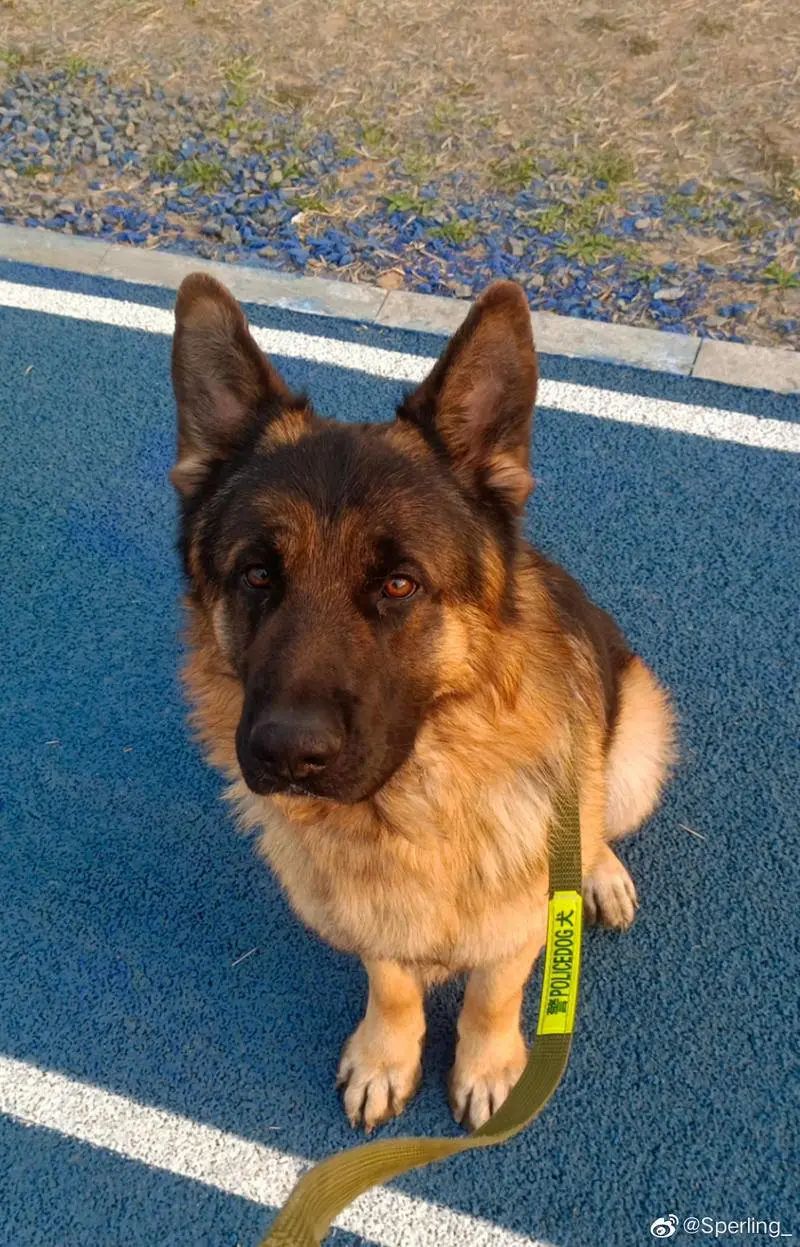
Eliminated dogs waiting for auction. Photo: Respondents
The 33-year-old racing driver Xiaobing flew from Zhengzhou, Henan Province to Shenyang, more than 1,000 kilometers away, to participate in the auction on the evening of July 6. His budget is also about 30 thousand yuan. When the fifth shot was 151,000, he felt that he was definitely hopeless.
It’s not just buyers who are affected by the auction. The insider told Quan that there were not many people who participated in the auction in previous years, and many eliminated dogs would be bought by teachers, students or trainers of the school and kept by themselves. But this time it was so popular that it was impossible for the trainer to buy back the dog he trained.
"Bao cried sadly. She was six years old and never cried so much because of anything," Anna described in Weibo. She had an appointment with the trainer on the 32nd, and after she photographed Beibei, she would take it to see the trainer at the weekend. But it backfired. Anna saw at the scene that many trainers had red eyes.
02
train
The reason why the police dog auction has attracted attention is related to its pure pedigree, stable personality and strict selection and training. Puppies born in non-police dog breeding units will miss the "post" of police dogs for life.
In 2011, the Ministry of Public Security issued the Regulations on the Technical Work of Police Dogs in Public Security Organs. Article 24 stipulates that "the breeding of police dogs shall be carried out in a two-level breeding system under unified national management. The police dog base and research institute directly under the Ministry of Public Security are the first-class police dog breeding units of the Ministry of Public Security, and the provincial police dog base that has passed the assessment of the Criminal Investigation Bureau of the Ministry of Public Security is the second-class police dog breeding unit. "
The training of police dogs begins at an early age. According to the Southern Network, a police dog has been trained since it was born 6 to 8 months ago to cultivate basic feelings and cognition. At the bilibili, a police dog handler named "Police Dog Dung Officer" showed a picture in the juvenile training-in front of a one-person-high shelf, the handler took a group of pony dogs and used a tennis ball tied with a rope to attract the puppies to walk up and through the wooden frame one by one. The puppy is excited and hobbled, and some timid people will inevitably fall off the shelf, and sometimes the trainer will reach out and touch his head to comfort him.
In an interview with Netease’s "Human World", a dog trainer said that puppies will have corresponding assessment items every month. When they are 3 months old, they should understand simple passwords such as "coming" and entering and leaving the dog cage, and they can chase what the dog trainer throws. When you are 4 months old, you should be able to listen to orders and grab things, take the initiative to find a hidden dog trainer and adapt to the touch of strangers.
Followed by a basic training for about 3 months to establish a "tacit understanding" between people and dogs. In the work of "Police Dog Dung Officer", a trained horse dog will make different postures according to the trainer’s gestures, and these obedience categories include remote command, delivery, barking, refusal to eat, progress, obstacles and so on. Taking the title as an example, the trainer will take the pole to train the small police dog’s desire to take the title, and sometimes he will deliberately train around strangers to exercise the courage of the small police dog.
In the future, these obedience training will enable police dogs to complete actions that ordinary dogs can’t achieve. "In the world of police dogs, the importance of obeying orders is far greater than your own life and death." A policeman who claimed to have five years of police dog training experience said.
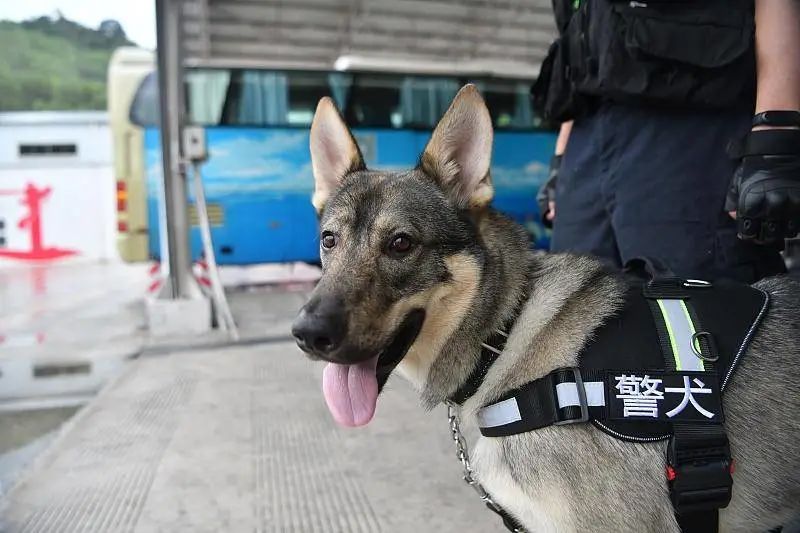
A drug dog on a mission. Image: CFP
After 8 months of training, most police dogs have their own professional direction, and each major needs different learning time. According to Beijing Youth Daily, it only takes about three months of training for snow search, material evidence search and drug search to meet the job requirements initially, plus about four weeks of "internship" to get on the job; It takes 10 months to track dogs; The direction of criminal investigation will take longer training, which takes 6 to 8 months-which means that it will be more than 2 years old when it officially starts working.
Xiaobing is aiming at the strict standards and training of police dogs. He thought, "Even if they are not admitted to civil servants, after training, their character and obedience must be of high standards."
03
eliminate
To become a police dog, elimination is necessary. According to Beijing Youth Daily, a batch of dogs will face a 35% elimination rate until the training is completed. The batch auctioned on July 7 is only the dogs eliminated in the first stage.
Elimination begins at birth-during the transition period from birth to two months, the staff will pick out unsuitable dogs. Puppies with poor development and worrying health will be eliminated at this stage.
Inappropriateness is reflected in both physique and personality. According to the report of Southern Network, when puppies play together, the dog trainer will observe their state. Dogs that are bold and like to compete will be "retained"; And those puppies who are not competitive and timid will be eliminated. The elimination rate of this step is only 5%.
The whole training session lasts about 120 days. At this time, those puppies with poor working ability will be "advised off", accounting for about 15%. At the same time, the dog trainer will also observe and determine the puppies’ talents-some of them are more suitable for smelling and others are more suitable for seeing. In the subsequent training, 10% of the dogs will only be eliminated.
Of the 54 eliminated dogs in China Criminal Police College, 9 were eliminated because of "cowardice". They are either afraid because they are too timid to see outsiders; Either you can’t bite, and these are not suitable for working dogs.
As for the "external inhibition" in the reasons for elimination, it refers to the strong inhibitory performance after being stimulated by external stimuli. Xiao Bing, an emergency rescue instructor in sichuan police college, told Quan Xian that this is not necessarily timid, but it has a strong reaction to external stimuli, which is not conducive to accurately completing instructions or completing action tasks as required.
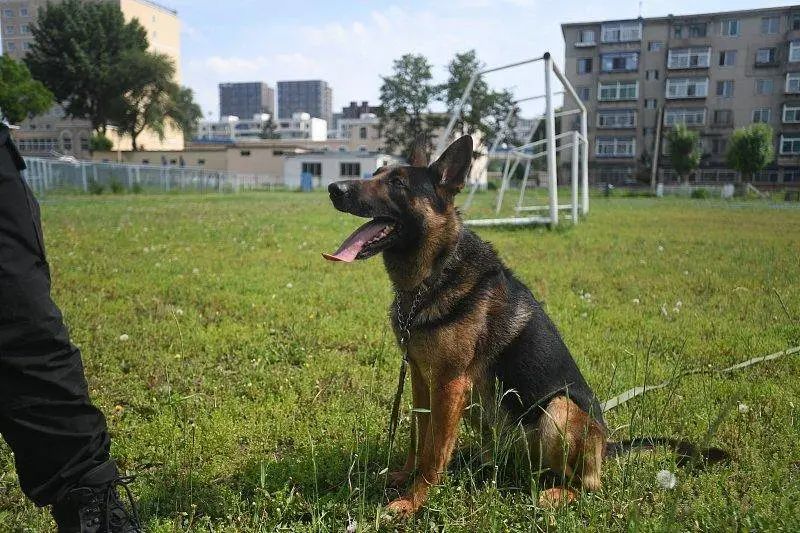
Dogs being trained at Shenyang Police Dog Base of the Ministry of Public Security. Image: CFP
Sometimes, appearance is also very important. The reason for the elimination of "soft ears" is generally aimed at Demu, a variety with erect ears. As the name implies, the ears hang down and cannot stand up, which may mean genetic defects or genetic problems. Xiao Bing said that as a police dog, pure pedigree and clear pedigree mean strong stability and avoid instability when performing tasks.
Similarly, the "hammer lineage" and "long hair" in the reasons for elimination are just not suitable for appearance characteristics. The former may be impure, while long hair is not easy to maintain, and it is easy to suffer from skin diseases in the face of harsh working environment and is not suitable for performing tasks.
For dog handlers, the growth of puppies is not a stable survival of the fittest, and there will be uncontrollable situations from time to time in this process.
According to the dictation of Xiao Xu, a police dog trainer in Netease’s "The World", he once trained a five-month-old horse dog "Pineapple" and "a handsome and lively family member". But a few months later, this dog, which belongs to the main police dog breed, has a problem-pineapple is timid, and besides biting instructions, it also shows aggression to strangers and other trainers. It needs Xiao Xu to keep an eye on it from time to time to avoid accidents.
Xiao Xu guessed that the problem was a disease that pineapple had had. It used to be sick and infused. At that time, because it was active, the infusion needle always went deep into the meat. The pain remained in pineapple’s memory, making it timid and afraid of the hospital. At that time, because of illness, the time was delayed, and Xiao Xu was also anxious. In the follow-up training, he always mobilized the pineapple very excitedly and developed a bad habit of not listening to the password.
In the end, pineapple failed the examination and lost the qualification to become a police dog. The subordinate unit decided that if there was no problem after being evaluated by police dog training experts, it might be able to stay and become a breeding dog. The police dogs in service can only keep the state of "single dog"-sterilization will affect their fierceness, so only retired or about to retire dogs can have the opportunity to leave their offspring.
The examination and elimination of police dogs is lifelong. Xiao Bing told Quan that his unit basically has an assessment for learning and training every month and quarter. If it fails two or three times, it can only be eliminated. They need to constantly consolidate and review the skills they learned before they can leave a deep imprint. In other words, the police dog’s "learning is lifelong".
04
secret worry
Say goodbye to the "compiled" police dog, and the final choice is often to return to the family.
According to the report of The Paper, obsolete dogs and retired police dogs from government agencies often choose suitable families to give and adopt. Take Xichuan County, Henan Province as an example, because the special police brigade of the local public security bureau will foster the bitch in a social family, the eliminated puppy will also be returned to the original social family, and the social family will decide its disposal; For retired dogs, the local police will find a suitable adoptive family. As for those retired police dogs who are fierce and strong, they will support the elderly at the base.
Xiao Bing has been teaching for more than ten years. He revealed to Quan that the most common way to deal with it is to send the eliminated police dogs to the key departments such as the explosives depot to guard the door, or to be taken home by the trainers, or to stay at the base for the elderly. "After all, comrades who have worked hard together are distressed and reluctant."
On July 6th, the WeChat public account of Tai ‘an Public Security Bureau issued a notice on the disposal of 28 retired police dogs, in which the retired police dogs were adopted free of charge, while the eliminated police dogs were auctioned in 200 yuan from July 8th to 15th. On the afternoon of July 7, the police officer in charge of contacting the matter told Quan that most dogs had been adopted by insiders or locals.
The above-mentioned police officer said that the original police dogs were raised and managed by the original unit until they died naturally. This year, due to the limited breeding grounds, they were publicly adopted for the first time. Because large dogs are forbidden in most urban areas, there are many adoptions in counties, cities and rural areas, and each one has to pay a field visit, and the original unit will be responsible once it gets sick. Therefore, only local people are encouraged to adopt or bid. Xiaobing insisted on keeping a police dog, and made a special phone call for consultation on the 8 th, and returned disappointed again.
Xiao Bing heard about the police dog auction for the first time. Considering that the other party is a police dog school, the number of eliminated dogs is quite large every year. In his view, with the increase of dogs, this is also an alternative way.
But he inevitably has some concerns. As working dogs, police dogs must be aggressive, and "biting" is one of their compulsory subjects. In other words, it is a kind of biting dog, which needs careful consideration by buyers or adopters. This is also the reason why most police dogs are adopted by trainers-it is easier to control. In addition, the police dogs in the base live in cages, and the surroundings are relatively quiet. It takes time to adapt to the residents’ homes and surrounding environment.
According to previous reports, these "retired police officers" do have different temperament from domestic dogs. In an interview with a reporter from Jiangmen Daily in Guangdong, the trainers of the two police dogs said, "They don’t like touching strangers. They can’t feed them too much. They should get in touch with them slowly. After getting familiar with them, they will stick to you. Love them, accompany them, and remember to take them to play often."
In addition, Xiao Bing told Quan that the possibility that commercial organizations value the pure pedigree of police dogs and use them as breeding dogs is not ruled out, and this is inevitable and requires strict examination of adopters.
According to Jimu News, after the bidding, the adopters signed the Commitment Letter of Eliminating Dog Adoption at the scene, promising to abide by the local government’s regulations on dog raising and raise dogs in a civilized manner during the adoption period; Take corresponding management responsibilities for the adopted dogs, and the adopter shall take full responsibility for the death, injury or injury to others of the dogs; Be kind to recognized dogs, never resell or transfer the dogs, and keep them properly until they die naturally; The adopter voluntarily cooperates to provide personal information related to the dog, and promises not to use the dog to engage in any profit-making behavior.

Auction site. Photo: Respondents
Anna told Quan that most of the buyers who finally clinched the deal were foreigners. "I feel that the family bought less, and most of them were bought by the eldest brother in their 40 s and 50 s." At the scene, she saw that many buyers were three or four people together. Some people bought it, and people in the same industry would continue to shoot. Many people bought several dogs at a time. "It should be sterilized and auctioned, even if the buyer pays for sterilization. I just hope that they will not be used as breeding dogs. " After reluctantly giving up, she still has vague concerns about the future of No.32.
(Original title: "Behind the highest auction of 330,000 yuan for eliminating police dogs: How difficult is it for a dog to become a police dog")
Original title: "330,000 yuan to buy an eliminated police dog, what did you buy?"