Recently, frozen pears in Harbin are red all over the country. However, many people in Northeast China said: The frozen pears eaten in this way are soulless!
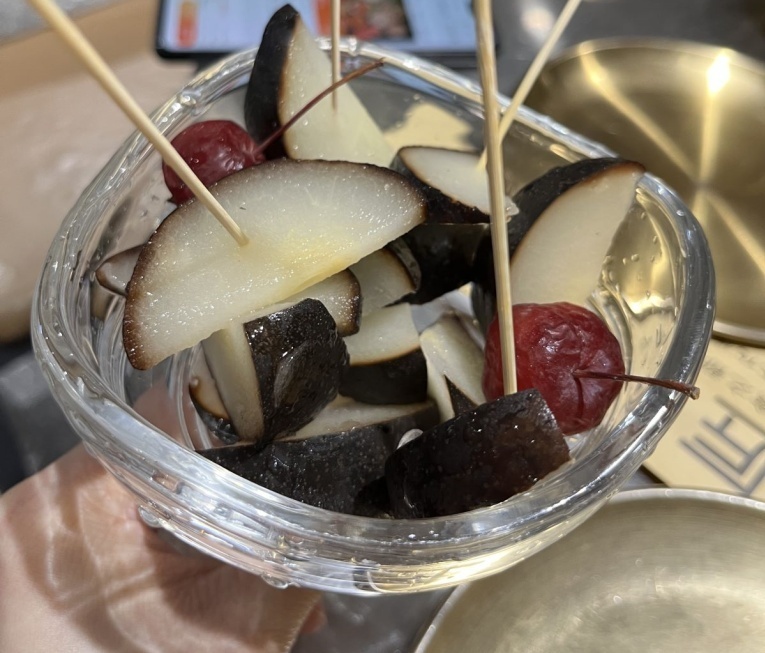
Peeling and slicing, it is the heart of the northeast buddies! Frozen pears, after biting a small mouth, should directly suck the juice inside, and ruthlessly suck the juice inside, leaving a dark skin, commonly known as "vacuum suction method."
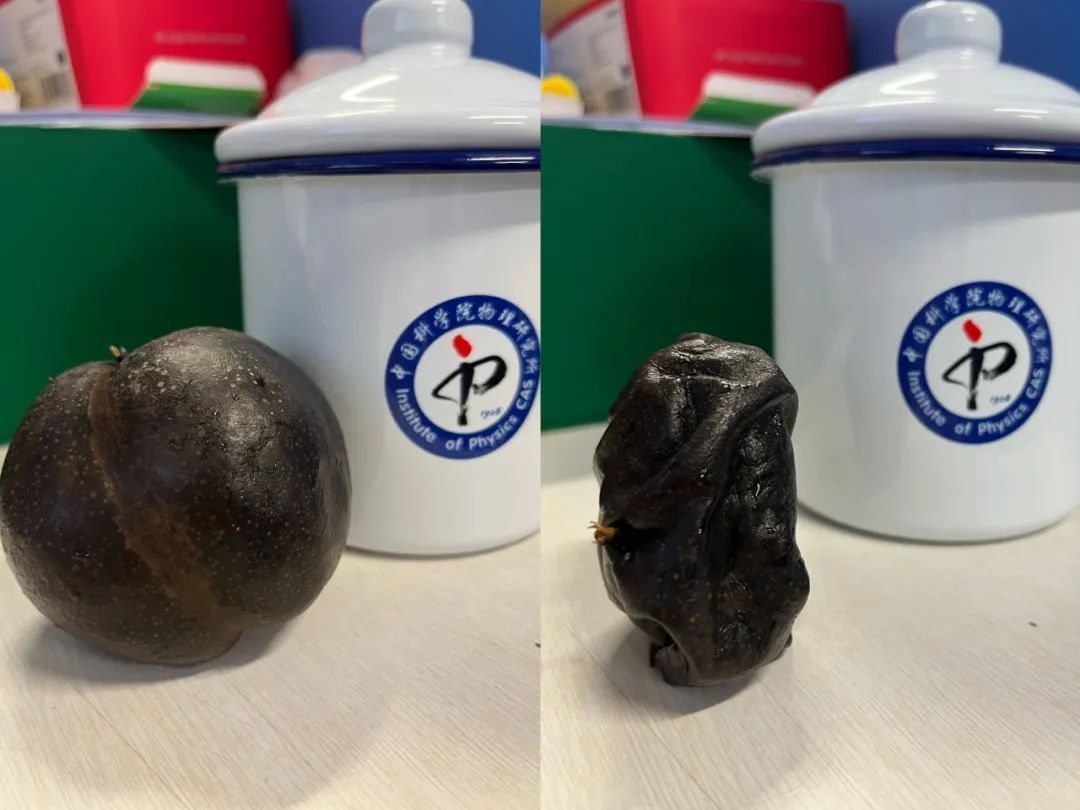
However, the black color of frozen pears is really easy to be misunderstood as deterioration. So, where did this dark color come from?
Why is the frozen pear so dark?
Most of the water in pears is stored in vacuoles of cells. When the pear is frozen, the water in the vacuole freezes into ice and becomes larger, which will burst the cell wall and release the polyphenol oxidase that was originally locked in the cell.
Pear skin is rich in plant polyphenols, which is a kind of polyphenols, and it will react with oxygen in the air slowly under the catalysis of polyphenol oxidase. Polyphenols are first transformed into quinones, then undergo a series of dehydration and condensation reactions, and finally form brown pigments.
For pears, the activity of polyphenol oxidase in the peel and the content of phenolic compounds are much higher than those in the pulp, and the skin is in direct contact with oxygen, so the main reason is that the peel browns during the freezing process, and the pulp inside can still maintain a light yellow color.
Among them, what is the quinone substance that causes color change?
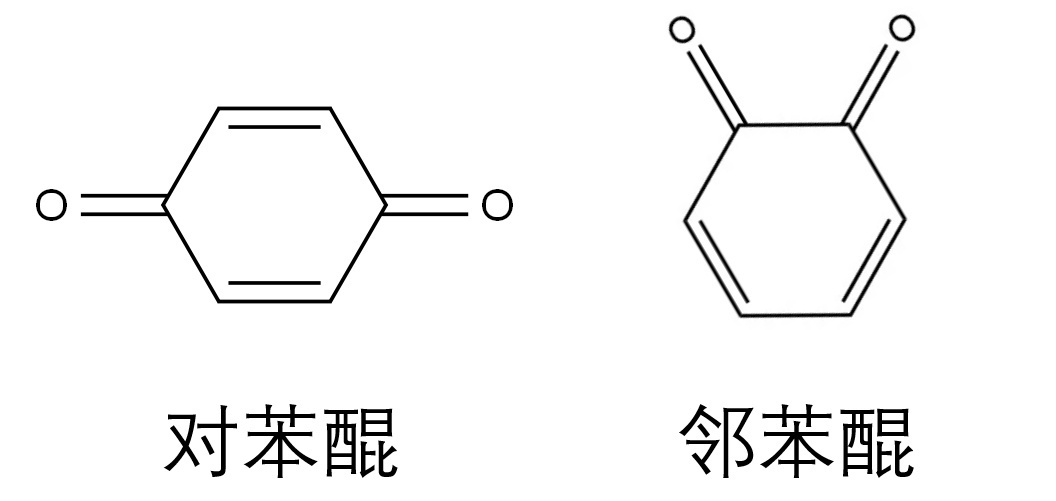
Quinone is an organic compound which replaces two hydrogen atoms of aromatic parent nucleus with one oxygen atom to form a six-membered ring structure containing two double bonds and two carbonyl groups.
The simplest quinone is benzoquinone, and its chemical formula is C6H4O2. Let’s dream back to high school chemistry with a particularly simple question: How many benzoquinones with different structures can you write?
Quinones contain many conjugated bonds, and there is the phenomenon of electron sharing between adjacent conjugated bonds, which makes the whole system have lower energy and stronger molecular stability. After the energy band structure of molecules is modulated, they can absorb and reflect light in the visible band, so quinones are generally colored.
Para-quinones are mostly yellow, and ortho-quinones are mostly red or orange. Quinone and phenol are particularly easy to transform into each other, forming a redox system. For example, colorless hydroquinone is easily oxidized to yellow hydroquinone.
Therefore, this dark frozen pear is actually mainly a process in which phenols become quinones.
Why is the frozen pear so sweet?
Now, we know why frozen pears are so black! Then, another question, why do frozen pears become particularly sweet?
Generally speaking, there are many kinds of sugars in fruits, such as fructose, glucose and sucrose, among which fructose has the highest sweetness.
Fructose is very special, and it has two chemical configurations, furan fructose and pyran fructose. The sweetness of the latter is about three times that of the former. When the temperature is below 40℃, with the decrease of temperature, furan fructose will gradually be transformed into pyran fructose with higher sweetness.
We can look at three common pears, the sugar content of which:
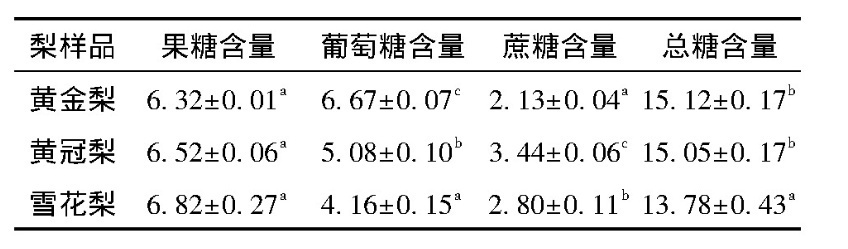
It can be seen that the content of fructose in pears is still relatively high.
Therefore, the main reason why frozen pears become sweeter is that the fructose contained in them is transformed into pyran fructose with higher sweetness at low temperature.
In fact, not only pears, but also people like to eat iced watermelons in summer, which is also because watermelons have high fructose content and will be sweeter after freezing.
However, the sugar in peaches and plums is mainly sucrose, and its sweetness will not change obviously with the temperature rise and fall, so the sweetness after freezing does not change much.
Small coup of homemade frozen pear
Seeing this, you must be very excited and want to freeze a pear yourself to check it out! There are so many varieties of pears. Will the frozen pears taste good if you use any variety?
Fortunately, someone has already studied it! The research team picked 59 kinds of pears from different regions, such as QiuPak Lei, Pingguo Pear, Yali Pear, Korla Fragrant Pear and Huangguan Pear, and made a detailed analysis of their skins and pulps after frozen storage, including the fineness of pulp taste, the degree of sweetness and sourness, the juice content, and whether the peels are easy to peel off.
According to the comprehensive data analysis, Qiuzi pear is more suitable for frozen pear. After freezing, the taste will be more delicate, the sweetness will be higher, and the juice will be rich, so it can be vacuum sucked!
After choosing the varieties of pears, it is natural to consider how to freeze them.
It is said that in the northeast which is cold enough, as long as the pears are buried in the snow and frozen for 4~5 days, when they are taken out, they will be black and frozen.
Of course, it is recommended to bury it deeper, otherwise, when you go to see it, you may find that the pear you buried in the snow was pulled out by some greedy little animal and bit … …
If it is in the south, what should we do? Some netizens recommend the method of repeated freezing: take the pears out and thaw after freezing in the refrigerator, and then take them to the refrigerator for freezing, and repeat the operation for 4~5 days.
The reason is that this operation can simulate the temperature difference in the northeast, and use the volume of water and ice to alternately change, so that more juice can flow out of the cells and the real frozen pears can be frozen.
Focus, if you are in the warm south in winter, it is not recommended to try this! Let’s take a look at the temperature difference in Erbin in recent days:
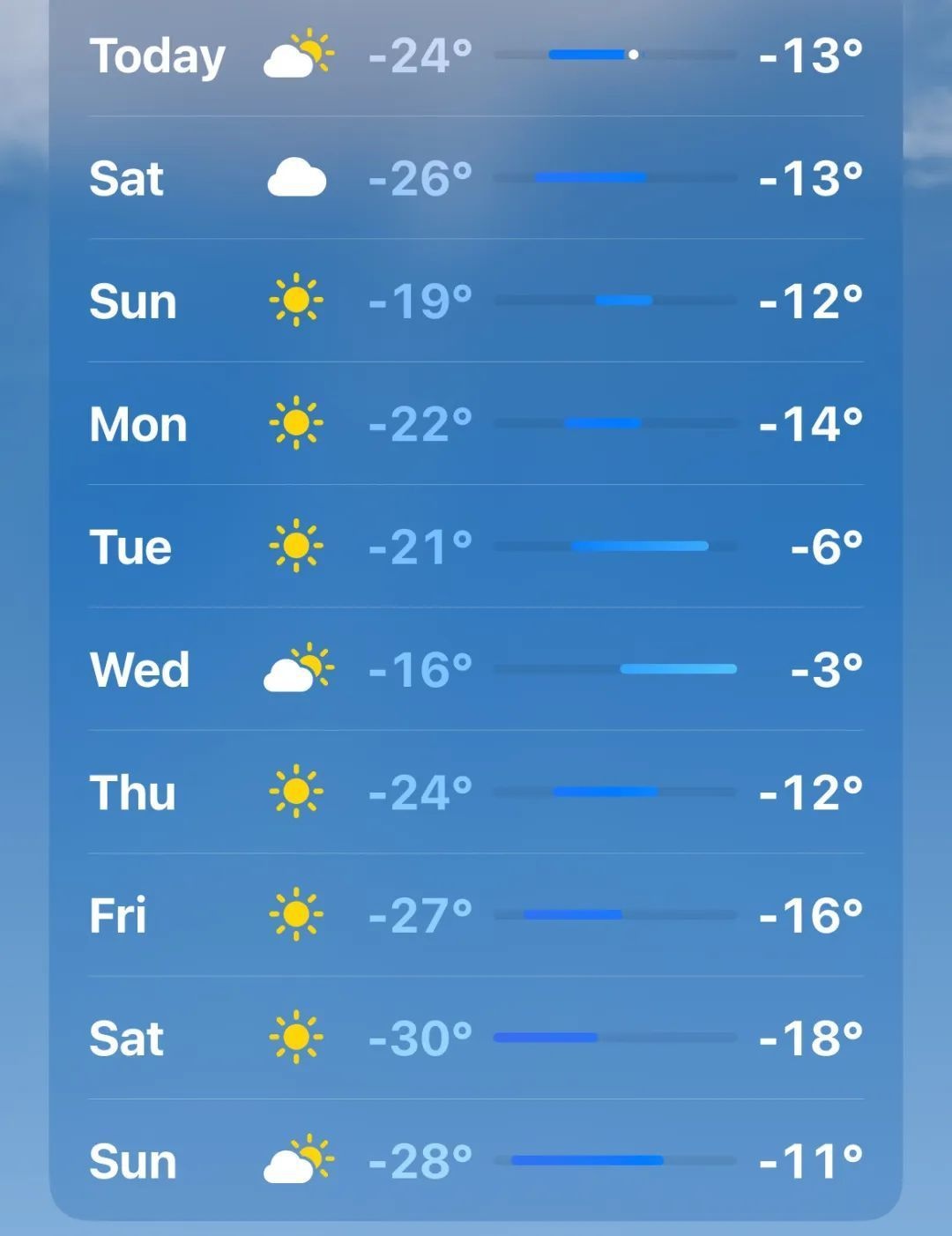
Even the highest temperature is many degrees below zero … Let’s take a look at the temperature in Guangzhou in recent days:
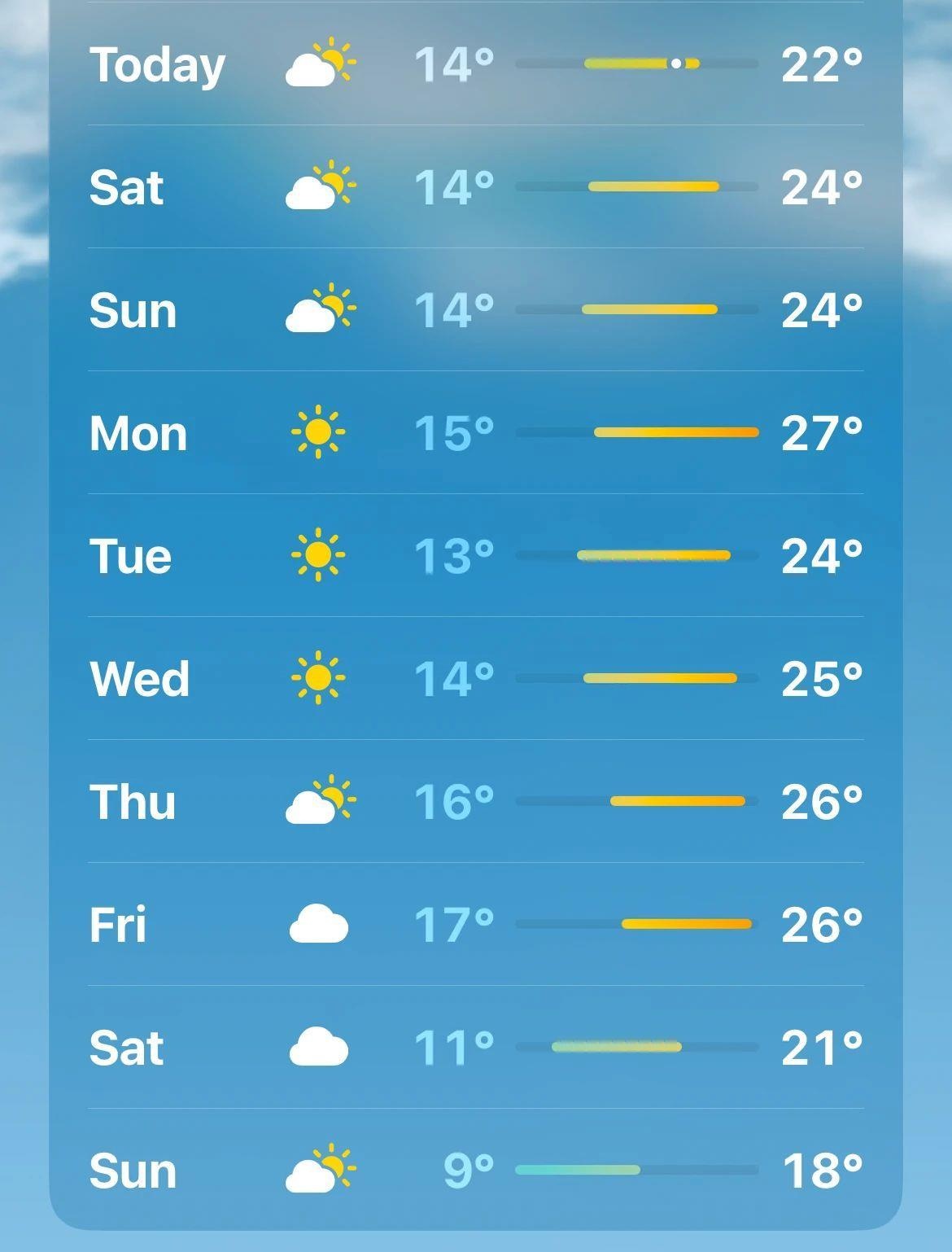
If friends in Guangzhou repeatedly take pears out of the refrigerator to thaw, the high temperature of more than ten degrees, once the thawing time is not well controlled, will easily make pears deteriorate during thawing.
Finally, your pear is really black, but it is possible that it is just broken … …
Is liquid nitrogen frozen pear reliable?
Since the temperature of the refrigerator is not low enough, should the temperature be enough with liquid nitrogen? Frozen pears with liquid nitrogen, can it quickly freeze out the dark, sweet and juicy effect? Move it to liquid nitrogen and we’ll see!
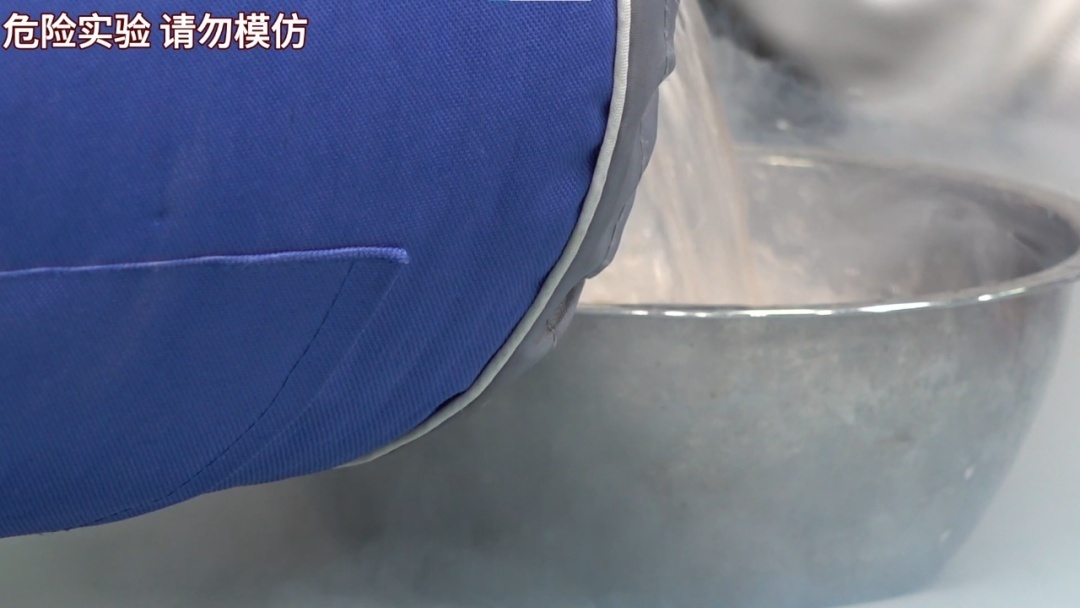
Put pears in the basin and pour liquid nitrogen.
When we soaked the pear in liquid nitrogen, about half a minute later, a pleasant click came, and the pear … couldn’t hold on … ..
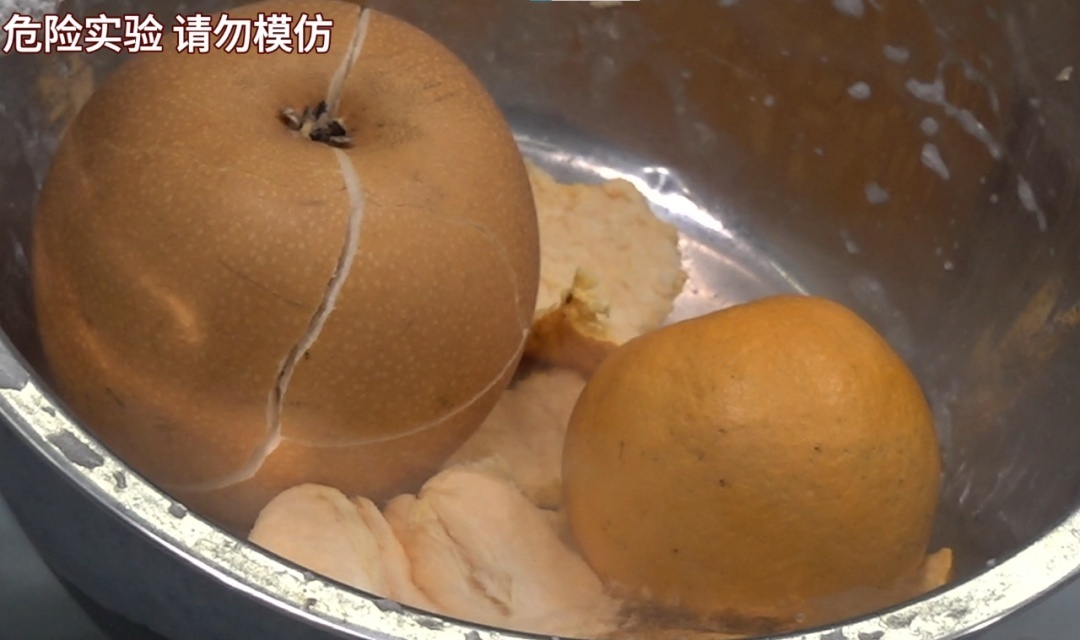
With the increase of soaking time, pear cracks become more and more, and finally it is directly divided into many small pieces, and the pulp inside becomes more and more like the color of coconut.
Two minutes later, after the liquid nitrogen evaporated, we took out the "frozen pear" and found that it became extremely hard. We used it to hit the desktop and made a loud bang, which was as good as bricks.
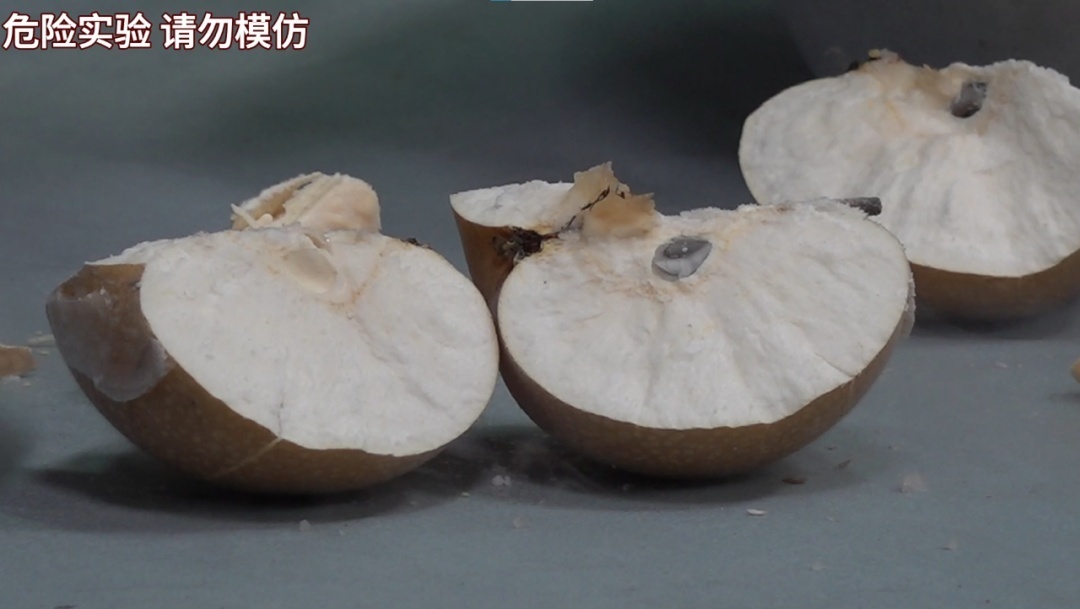
The skin of pears is basically yellow, and there is not much change.
In fact, this also proves that the blackening process of frozen pears is a slow enzymatic browning reaction, and it is not enough to meet the low temperature conditions, and it takes a long time for phenols to be transformed into quinones as much as possible.
Because the temperature of liquid nitrogen is too low, it directly destroys the complete structure of pears and becomes fragmented in a few minutes.
When we melted this half "frozen pear" in warm water, we found that the pear floated on the water, and only a layer of ice was formed around it.
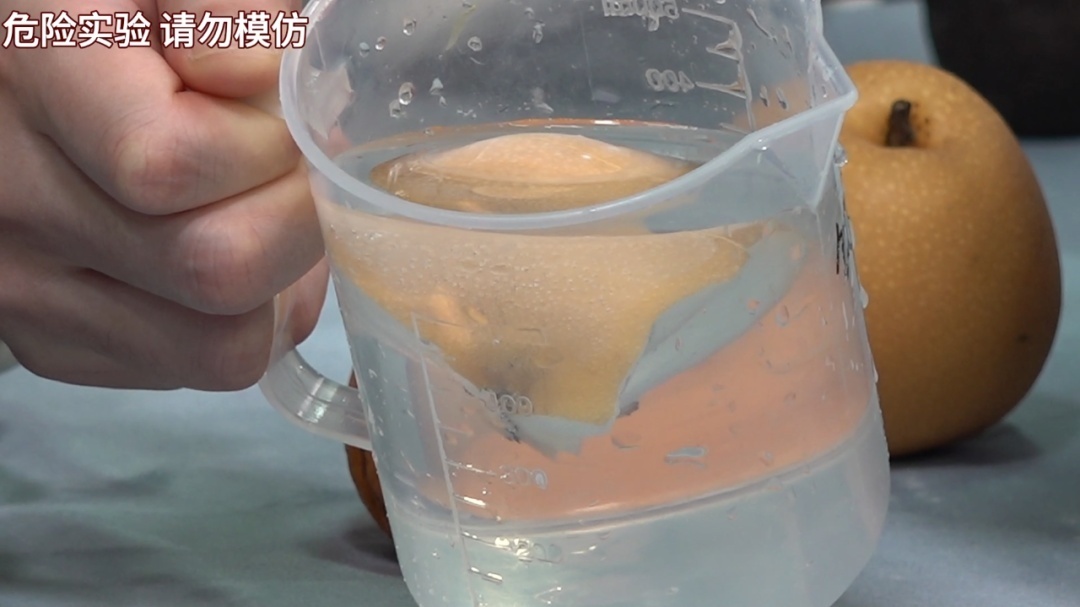
When the temperature gradually returned, pears became soft and rotten, and because the pulp was directly exposed to the air, it was oxidized to brown.
Four words: inedible.
Because the pear doesn’t have a relatively frost-resistant skin protection, the last frozen pear overturned. So, what if it is replaced with a thick skin?
Please welcome the sugar orange! Similarly, when we soaked the sugar orange in liquid nitrogen, we found that the sugar orange also became hard and brittle, but because the skin was thick and tough, it did not crack and remained intact.
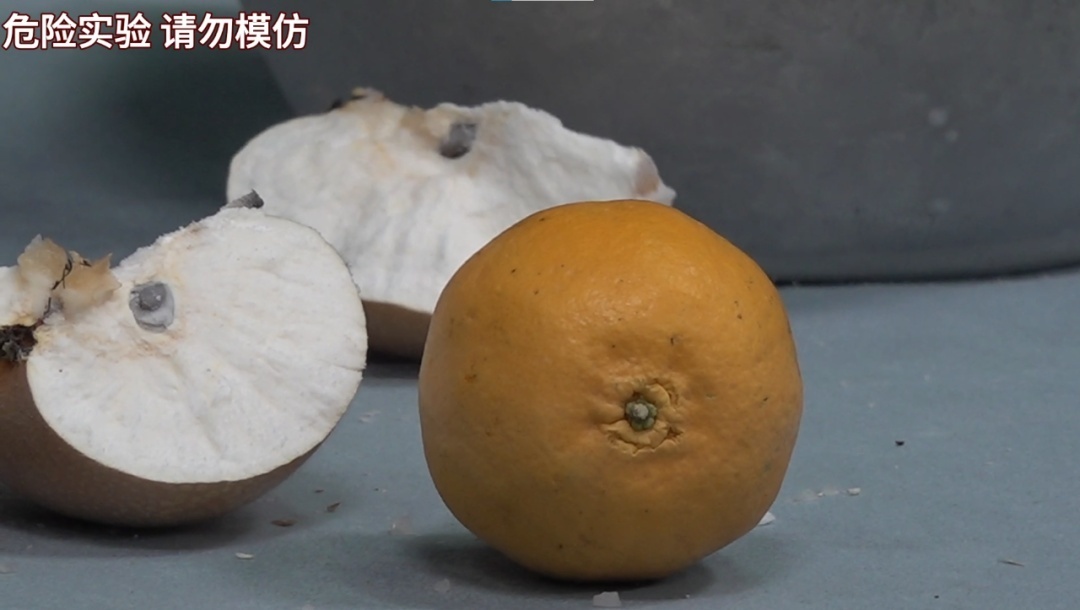
Sugar orange taken from liquid nitrogen
After gradually warming up, the skin of the sugar orange becomes soft again. After peeling off the skin, the pulp inside looks not much different from the original one, but it tastes a bit like a frozen pear when bitten, and it is sassy and waxy, and its sweetness will be higher.
That is to say, using liquid nitrogen to quickly freeze sugar orange, under the condition that the peel tightly protects the pulp, it mainly undergoes a physical change of reversible phase change. When the temperature gradually returns, most of the pulp can return to its original state, but a small part of the tissue structure has been destroyed at extremely low temperature, which contributes to the final taste similar to smoothies.
In a word, frozen sugar oranges are a great success!
Finally, friends in the south will definitely ask: So, why do southerners freeze pears at home? Answer: Put the pear in the freezer, and then … forget it!